
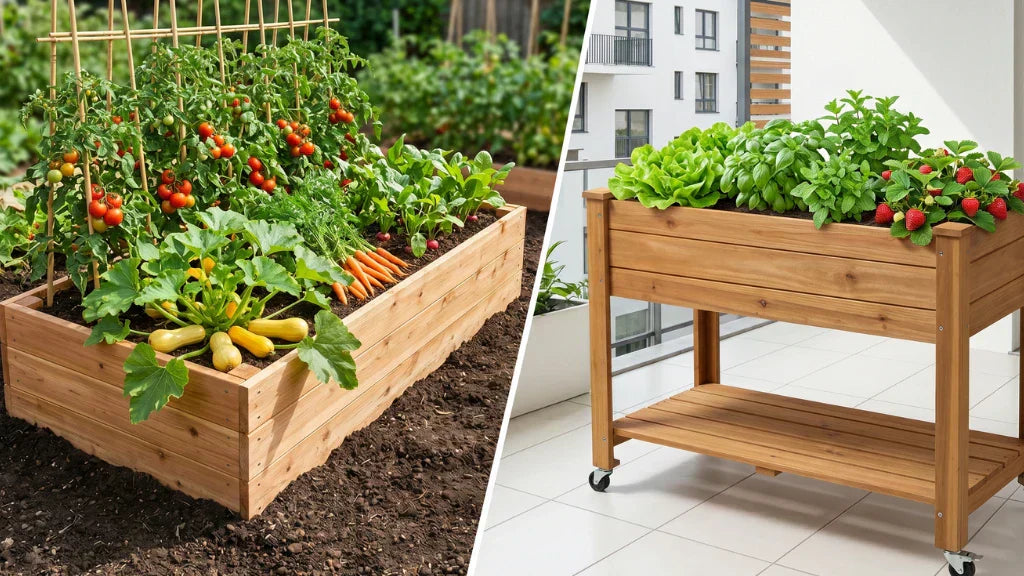
Raised beds and raised planter boxes both make gardening easier, cleaner, and more manageable. But they are not the same thing. The difference affects root growth, crop choice, placement, and long term value, so choosing the right one from the start can save money and lead to better results.
What Is a Raised Bed?
A raised bed is an open bottom garden frame placed directly on the ground or over another surface. Soil fills the frame, and in many setups roots can grow down into the soil beneath. Gardeners use raised beds mainly for vegetables, herbs, and flowers in backyards, side yards, and larger outdoor growing areas.
They remain a popular choice for food gardening because they offer better drainage, looser soil, and more room for roots than many in ground plots.
How It Is Built
Most raised beds are rectangular frames with no floor. That open base is the defining feature. It allows water to drain naturally and gives plant roots more freedom than a fully enclosed container.
Assembly is usually simple. Boards or panels connect at the corners with screws, brackets, or interlocking joints. Taller models may include cross supports to keep the sides from bowing once the bed is filled with soil.
Common Materials
Wood is still the most common option. Cedar and redwood are often chosen for their natural resistance to moisture and decay. Fir and pine are more budget friendly and widely available. Galvanized steel has also become popular for its clean look and durability, while composite materials appeal to buyers who want lower maintenance.
For edible gardens, many buyers prefer untreated wood, naturally rot resistant species, or other garden friendly materials.
For a practical starting point, this wood raised garden bed offers a long 92.9 inch profile that gives vegetables more room to spread out, making it a strong fit for herbs, strawberries, tomatoes, and mixed backyard planting.

What Is a Raised Planter Box?
A raised planter box is a fully enclosed container with a solid or slatted base that holds all of its soil inside the unit. Unlike a raised bed, it does not rely on contact with the ground below.
Planter boxes come in many styles, including elevated designs that make gardening easier on the back and knees. They are especially useful on patios, balconies, decks, and paved spaces where digging into the ground is not possible.
How It Is Built
Planter boxes are self contained. The growing box sits on legs, a frame, or a wheeled base, and the bottom includes drainage holes so excess water can escape.
Many models also include helpful extras such as liners, lower shelves, locking casters, or elevated working height. Those features can make a big difference in small spaces where convenience matters.
Common Materials
Wood remains the most common material, especially for outdoor styles that need to blend with patio furniture or garden settings. Fir, cedar, and acacia are all common choices. Metal planter boxes offer a more modern look and often hold up well in wet conditions, while resin and composite models are lighter and easier to move.
This planter box on wheels shows what a well designed elevated model can do. It combines a wood build, liner, storage shelf, and lockable casters, making it easier to reposition plants as sunlight and space change through the season.

Raised Beds vs. Raised Planter Boxes
|
Feature |
Raised Bed |
Raised Planter Box |
|
Base |
Open bottom |
Enclosed base with drainage |
|
Portability |
Usually fixed in place |
Easier to move, especially with wheels |
|
Soil volume |
Higher |
More limited |
|
Placement |
Best for yards and garden zones |
Best for patios, decks, balconies, and compact areas |
|
Root depth |
More flexible |
Limited by container depth |
Size and Footprint
Raised beds are usually larger and better suited to growing multiple crops at once. Standard sizes often range from compact 4 by 4 foot beds to larger 4 by 8 foot layouts and beyond.
Planter boxes are typically smaller by design. They work best for focused planting rather than full seasonal vegetable production.
Soil Depth and Volume
This is one of the biggest differences between the two. Raised beds generally provide more usable soil volume, and open bottom designs allow deeper root development when placed on the ground.
Planter boxes are limited by the depth and capacity of the container itself. That can be perfectly fine for shallow rooted crops, but it becomes more restrictive for larger vegetables.
Drainage
Both options can drain well, but they do it in different ways. Raised beds let water move down and out through the open base. Planter boxes depend on drainage holes and a well designed bottom.
If the drainage is poor, a planter box can become waterlogged quickly. That is why good hole placement, a breathable liner, and the right potting mix matter so much.
Portability
Raised beds do not move easily. Once assembled and filled, they are usually treated as permanent or semi permanent structures.
Planter boxes are much more flexible. Wheeled models can be shifted to catch better sun, avoid rough weather, or simply fit a new layout. That mobility is a real advantage in smaller outdoor spaces.
Placement Options
Raised beds work best in dedicated outdoor growing areas where you have room to commit to a larger garden setup. They can be used on hard surfaces, but weight, drainage, and support need to be considered carefully.
Planter boxes are the easier choice for patios, balconies, decks, courtyards, and rental properties. They are built for spaces where a full garden bed is less practical.

Which Is Better for Growing Vegetables?
The answer depends mostly on what you want to grow.
Best Crops for Raised Beds
Raised beds are better for crops that need more space, deeper soil, or stronger root development. Tomatoes, peppers, squash, cucumbers, beans, carrots, beets, and potatoes all benefit from the extra room a raised bed provides.
They are also better for gardeners who want to grow several types of vegetables in one organized space.
Best Crops for Planter Boxes
Planter boxes are excellent for herbs, lettuce, spinach, radishes, green onions, strawberries, and other shallow rooted or compact crops. They can also support peppers or tomatoes when the planter is deep enough, but crop size needs to match the container.
For kitchen herbs and salad greens, planter boxes are often more than enough.
Root Depth and Yield
Root depth is one of the main reasons raised beds usually outperform planter boxes for vegetable production. More room below the surface means better moisture stability, less root stress, and more consistent growth.
A planter box can still be productive, but once soil volume becomes tight, yield tends to follow. That is especially true for larger or fruiting crops.

Which Is Better for Small Spaces?
Patios, Balconies, and Decks
Planter boxes are the clear winner here. They are easier to place, easier to manage, and better suited to hard surfaces. Elevated models also make daily watering and harvesting more comfortable.
In tight outdoor areas, convenience matters just as much as growing potential.
Backyards and Garden Areas
If you have available ground space, a raised bed usually makes more sense. It gives you more growing area, more flexibility with crop spacing, and better value per square foot.
For gardeners who want a real vegetable patch rather than a small container garden, the raised bed is usually the stronger choice.
Best Choice for Renters
Renters often need something that is portable, compact, and easy to remove when moving out. Planter boxes fit that need much better than a permanent raised bed.
That is one of their biggest advantages. They let you garden seriously without tying the setup to one property.
A raised planter on wheels is one of the most practical options for renters and small space gardeners because it combines mobility, elevated working height, and a compact footprint that is easier to manage than a fixed bed.

Cost, Durability, and Upkeep
Upfront Cost
Raised beds are usually cheaper per square foot of growing space. Basic wood beds often start at a lower price point, while elevated planter boxes tend to cost more because of their enclosed construction and added features such as legs, shelves, liners, or wheels.
In simple terms, a raised bed usually gives you more growing area for the money.
Long Term Value
Both can offer strong value with basic care. A well built raised bed can last for many seasons, and a quality planter box can do the same when drainage and moisture exposure are managed properly.
The better long term buy depends on how you garden. Raised beds usually win on output and planting space. Planter boxes win on convenience and flexibility.
Weather Resistance in the US
Climate has a major impact on outdoor materials. In humid areas, wood can stay damp longer and wear faster. In hot, dry regions, it may crack or dry out more quickly. In colder parts of the country, repeated freeze and thaw cycles put extra stress on joints, finishes, and fasteners.
That is why material choice matters. Cedar, redwood, metal, and composite options often hold up better in demanding conditions, while value focused woods benefit from better drainage, proper sealing, and regular maintenance.
Maintenance Needs
Neither option is especially hard to maintain, but both need some attention. Soil should be refreshed periodically, drainage holes should stay clear, and wood surfaces may need resealing over time.
Wheeled planter boxes also need occasional checks on casters and hardware. The work is light, but ignoring it shortens the life of the planter.
What to Look for Before You Buy?
Before you choose a raised bed or planter box, focus on a few practical details that affect how well it fits your space, crops, and long term gardening plans.
|
Factor |
What to Check |
Why It Matters |
|
Material quality |
Wood type, finish, and hardware |
Affects durability, weather resistance, and long term value |
|
Size and depth |
Overall footprint and soil depth |
Determines what crops you can grow successfully |
|
Assembly and hardware |
Screw quality, brackets, and joint strength |
Helps ensure the planter stays stable once filled with soil |
|
Drainage design |
Drainage holes, liner, and airflow |
Reduces the risk of soggy soil and root problems |
|
Price range |
Base price and added features |
Makes it easier to judge overall value |
Explore the full PETSCOSSET Gardening Collection for raised beds, planter boxes, and elevated gardening options suited to different spaces and growing goals.

Final Verdict
Choose a raised bed if:
- You have yard or garden space to work with
- You want more soil volume and more growing area
- You plan to grow larger or deeper rooted vegetables
- You want better output per dollar spent
Choose a raised planter box if:
- You are gardening on a patio, balcony, or deck
- You want a more portable setup
- You are renting or gardening in a temporary space
- You mainly grow herbs, greens, strawberries, or compact vegetables
Neither option is always better. The right choice depends on your space, your crops, and how you want to garden. Get those three things right, and either one can work extremely well.
FAQs
Can a raised planter box replace a raised bed?
It can be used for herbs, greens, strawberries, and some compact vegetables. It is less suitable for larger crops that need more depth and more root room. In that sense, the two overlap, but they are not fully interchangeable.
How deep should a raised bed be for vegetables?
About 12 inches works for many common vegetables, while 18 inches or more is usually better for tomatoes, peppers, and larger crops. Deeper beds give you more flexibility and make root development easier.
Are raised planter boxes good for small spaces?
Yes. They are one of the best solutions for patios, balconies, decks, and other compact outdoor areas because they keep the garden contained, easy to manage, and easier to reach.
What is the best material for outdoor use?
For wood, cedar and redwood are strong choices because they naturally resist moisture and decay. Metal and composite can also perform very well outdoors, especially in wet or demanding climates. The best option depends on your budget, climate, and how much maintenance you are willing to do.


Share:
How to Fill a Raised Garden Bed Step by Step?
What Should Be Inside a Chicken Coop? Chicken Coop Essentials