

Large breed dogs — like German Shepherds, Labrador Retrievers, and Golden Retrievers — aren’t just “big” in size; they also have higher activity levels, stronger muscle structure, and greater space requirements.
Average height: 24–30 inches (shoulder height)
Average weight: 60–120 lbs
Daily exercise need: 60–120 minutes
Without adequate outdoor space, they may experience joint stiffness, behavioral stress, or even overheating during summer months.
When choosing the best outdoor dog kennel for large breeds, focus on:
Size & Space 📏
Minimum kennel size: 6 ft (length) x 4 ft (width) x 6 ft (height)
If you have multiple large dogs, opt for at least 50% extra floor space.
Material Durability 🛡️
Heavy-duty powder-coated steel or treated wood to withstand chewing.
Weatherproof roofing for year-round protection.
Ventilation & Shade 🌬️
Cross-ventilation helps regulate temperature.
Shaded areas prevent overheating in summer.
Security 🔒
Sturdy latches & escape-proof designs.
Smooth edges to avoid injuries.
A customer in Texas shared that after switching from a 4x4 ft kennel to a 8x6 ft insulated kennel, their 95 lb Labrador had:
30% more activity during the day
Better sleep quality at night
Reduced anxiety behaviors (less pacing & barking)
Large dogs are more sensitive to heat stress due to body mass.
Summer: Install cooling pads or fans.
Winter: Use insulation panels and a raised floor to prevent cold seeping in.
Rainy seasons: Ensure a sloped waterproof roof to keep the interior dry.
✔️ Place the kennel on level ground to avoid water pooling.
✔️ Add soft bedding for comfort but clean weekly to prevent bacteria.
✔️ Keep a water dispenser inside, especially in warmer months.
✔️ Rotate toys to keep your dog mentally stimulated.
A well-designed outdoor kennel is more than just a shelter — it’s your dog’s safe space, offering freedom while keeping them secure. Large breeds thrive when they have ample space, solid protection, and good ventilation.
👉 Browse our Dog Kennel Collection for high-quality outdoor kennels built for large breeds.
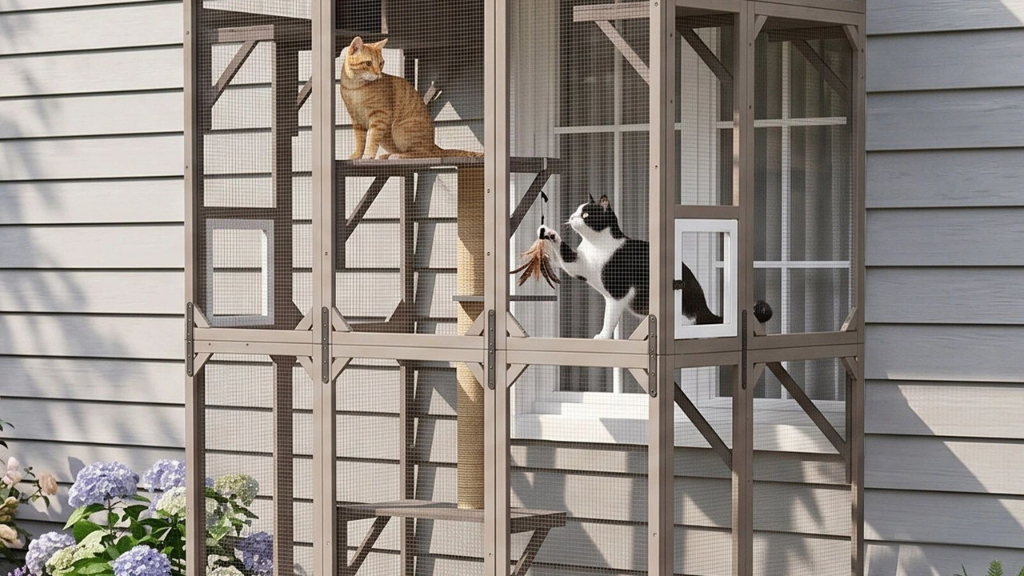
Most people buying a cat window box focus on looks and price. The decisions that actually determine whether your cat uses it come down to a few easily overlooked details.
Read moreabout 7 Cat Window Box Mistakes to Avoid Before Buying

Building a catio yourself seems like the budget-friendly choice. But tools, time, and first-build mistakes add costs that most guides never put on the table.
Read moreabout DIY Catio vs. Pre-Built: The Hidden Costs of DIY

Your cat can't tell you they're bored or stressed - but their behavior can. These signs suggest a window catio might be exactly what they need.
Share:
What Do Backyard Chickens Really Need to Stay Happy?
Do Cats Grow a Thicker Coat in Fall?