
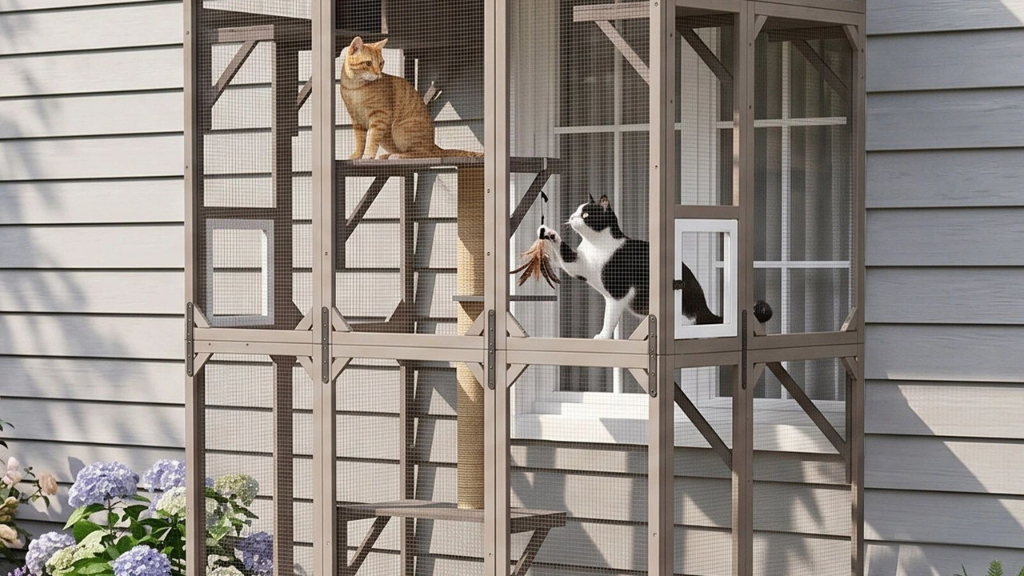
A cat window box gives indoor cats fresh air, sunshine, and a direct view of the outdoors. But the wrong choice can mean wasted money, a safety risk, or a box your cat simply ignores. Here is what to know before placing an order.
1. Choosing the Wrong Mounting Method
Why Suction Cups Fail Outdoors
Suction cups might seem like a convenient, no-drill solution, but they are not built for outdoor conditions. Temperature swings cause the cup material to expand and contract repeatedly, gradually breaking the seal against the glass. When you factor in the sudden impact of a cat jumping onto or off the structure, the grip weakens even faster.
Most suction cup failures happen without warning. A window perch that held firm in spring can detach on a hot afternoon in July, with your cat inside.
What Secure Wall Mounting Looks Like
A properly mounted cat window box is anchored to the exterior wall or window frame using screws and fixed brackets. This connection distributes weight across a solid surface, does not degrade with temperature or moisture, and holds steady when a cat lands hard or pushes against the mesh.
Before buying, check that the product specifies wall or frame mounting, includes the necessary hardware, and states a clear weight capacity. Petscosset’s Cat Window Box PET07 uses a wall-mounted design that stays firmly in place regardless of temperature or weather conditions.

2. Getting the Size Wrong
How to Measure Your Window
Sizing errors are one of the most common reasons a cat window box installation goes wrong. Measure the following before comparing any product options:
|
Measurement |
What to Check |
|
Window opening width |
Must fall within the product's stated maximum |
|
Wall surface around the window |
Needs a flat area for mounting brackets to sit flush |
|
Floor-to-sill height |
Affects how easily your cat can reach the entry point |
Underestimating Space for Multiple Cats
A box that comfortably fits one cat becomes a source of conflict the moment a second cat wants in. Cats need enough room to turn around, stretch out, and exit without stepping on each other. Cramped shared spaces lead to stress and avoidance over time.
If you have two or more cats, look for an enclosure with enough floor area for both to sit without sharing the same spot. The 68-inch Wooden Cat Catio PET08 spans 68 inches across, accommodates one to three cats, and fits window openings up to 58 inches wide. It also includes removable tunnel ports for connecting to additional enclosures if you want to expand the setup later.

3. Overlooking Mesh & Structural Safety
Mesh That Looks Safe but Isn't
Not all mesh performs the same outdoors. Plastic or nylon mesh looks acceptable in product photos but stretches under pressure and degrades within a season or two of UV exposure. Thin wire with wide spacing can allow a larger cat to push through or catch a paw between the gaps.
|
Mesh Type |
Durability |
Weather Resistance |
Safety |
|
Plastic or nylon |
Low |
Poor |
Low |
|
Chicken wire |
Medium |
Moderate |
Medium |
|
Galvanized welded steel |
High |
Good |
High |
|
PVC-coated galvanized steel |
High |
Excellent |
High |
For outdoor use, galvanized welded steel mesh is the baseline to look for. It holds its shape under pressure, resists rust over time, and does not give way under a cat's weight or repeated scratching.
Weight Capacity and Frame Stability
The weight capacity on a product listing indicates the maximum static load the structure is rated for. But cats do not use window boxes gently. Jumping onto shelves, shifting position, and scratching against the frame all apply dynamic force well above a cat's resting body weight.
Look for a frame that uses solid wood joinery rather than stapled or glued connections, and choose a weight capacity with a comfortable margin above your cat's actual weight. For larger or more active cats, that margin matters more than it might seem at first glance.

4. Skipping Weather Protection
What Happens Without a Proper Roof
An uncovered window box exposes your cat to both direct rain and intense sun. Prolonged moisture warps wooden frames, causes mold on fabric components, and leaves the interior wet after every shower. On hot days, afternoon sun through an enclosed mesh structure raises the internal temperature quickly, which is a serious risk for cats that cannot exit on their own.
A slanted or overhanging waterproof roof prevents water pooling, provides shade during peak sun hours, and extends the lifespan of the wood and hardware. It is not an optional upgrade but a basic requirement for any window box intended for year-round outdoor use.
Ventilation vs. Bug Exposure
Good airflow keeps the space cool and prevents moisture buildup, but open mesh also lets insects in. This trade-off is easy to overlook until summer arrives and the box becomes a fly trap.
High-density galvanized mesh with tight spacing addresses both concerns in a single layer:
- Maintains adequate airflow without requiring a secondary screen
- Blocks most insects from entering the enclosure
- Simplifies cleaning and reduces a common reason cats stop using the space

5. Ignoring Enrichment Inside the Box
Why an Empty Box Gets Ignored
Cats are driven by curiosity, territory, and the need to engage actively with their environment. A bare box with four mesh walls gives them nowhere to climb, nothing to scratch, and no reason to stay for more than a few minutes, which is why many owners find the enclosure gets approached once and then abandoned.
An outdoor window box needs to function as an extension of your cat's territory, with things to do and spaces to claim. That is what determines whether a cat uses it daily or ignores it entirely.
Built-In Features Cats Actually Use
The features that make the most difference are:
- Elevated platforms — satisfy the instinct to perch high and observe the surroundings
- Multiple height levels — give cats the option to climb, descend, and choose their preferred vantage point
- Scratching surfaces — give cats an outlet for stress and help maintain healthy claws
- A hammock — provides a semi-enclosed resting spot with an open view, often one of the most-used features
- Sheltered resting spots — enclosed condos or covered shelves where more reserved cats can retreat without feeling exposed
The Cat Window Catio PET94 covers all of these bases with 6 platforms across multiple levels, dual scratching posts, a hammock, and two enclosed condos, giving cats plenty of ways to use the space on their own terms.

6. Assuming Assembly Will Be Easy
Signs of a Well-Designed Flat Pack
Flat-pack quality varies widely. A poorly designed kit typically arrives with:
- Unlabeled or loosely sorted parts
- Instructions that rely on small, ambiguous diagrams
- Holes that require extra drilling or modification to align
A well-designed one will have every component labeled by number, screws sorted by size, pre-drilled holes that align on the first attempt, and a step-by-step pictorial manual that follows a logical sequence. If the manufacturer also provides an installation video, that is a strong sign the product has been tested under real assembly conditions.
What to Check Before You Start
Before opening the box, make sure you have:
- A standard Phillips-head screwdriver (no power tools needed for Petscosset's window boxes)
- Enough flat floor space to lay out all components
- A second person available, particularly for the wall-mounting step
Check all parts against the included parts list before assembling anything. For the wall-mounting stage, identify your exterior wall material and locate the appropriate anchor points in advance. The PET07 and PET08 assemble in 15 to 45 minutes, while the PET94 takes 25 to 45 minutes with one to two people.
7. Expecting Cats to Use It Right Away
Why Cats Hesitate
Cats are territorial and treat unfamiliar structures with caution. A window box that carries the smell of fresh wood or shipping packaging is not yet part of your cat's territory, and hesitation during the first few days is completely normal.
Avoid placing your cat inside to speed things up. Cats form lasting associations with how they first experienced a space, and a stressful introduction often leads to long-term avoidance.
A Simple Routine to Help Them Adjust
- Leave the access point open and let your cat approach on their own terms.
- Place a familiar blanket or a worn item of clothing inside so the interior carries a recognizable scent.
- Put a few treats near the entrance on the first day.
- Gradually move the treats further inside over the following days.
Most cats begin using the space within one to two weeks with this approach. Those that take longer are usually ones that had a pressured or stressful first encounter. Patience and familiar scents consistently work better than any form of coaxing.
Conclusion
Avoiding these mistakes takes less than an hour of research but can save you from a product that sits unused or fails prematurely. Measure your window, verify the mesh quality, and choose a box that gives your cat a genuine reason to use it. A collection of window catios is available to help you find the right fit.

FAQs
How do I know which window size fits my cat box?
Measure the width of your window opening from the inside of the frame on one side to the inside on the other. Compare this against the product's stated maximum window width. The PET07 fits openings up to 37.75 inches, the PET08 up to 58 inches, and the PET94 up to 63 inches.
Can wooden window catios stay outside year-round?
Yes, provided the product uses weather-treated or naturally durable wood and includes a waterproof roof. Petscosset's window boxes are built with solid fir wood and waterproof roof materials that hold up through rain, sun, and seasonal temperature changes. In areas with heavy snowfall, clearing accumulated snow from the roof after major storms will help extend the product's lifespan.
Is wall mounting safe for all exterior wall types?
Wall mounting is suitable for wood siding, brick, masonry, and vinyl siding. The key step is locating the structural elements beneath the surface — wall studs in wood-framed homes, or masonry anchors for brick and concrete.
How do I keep insects out of a window catio?
Choose a window box with high-density galvanized mesh. Tight mesh spacing blocks most insects while still allowing airflow through the enclosure. Keeping the area around the window clean and free of food residue also reduces insect attraction to the space.
Which Petscosset window box suits my situation?
The right choice depends on how many cats you have and how much built-in enrichment you need.
|
Product |
Best For |
Max Window Width |
Capacity |
|
Single cat, smaller windows |
37.75" |
1–2 cats |
|
|
Multiple cats, wider windows, expandable setup |
58" |
1–3 cats |
|
|
Multi-cat homes wanting built-in enrichment |
63" |
1–3 cats |


Share:
DIY Catio vs. Pre-Built: The Hidden Costs of DIY
Dog Kennels vs. Dog Crates: Which One Does Your Dog Really Need?