
A fenced yard gives your dog space to run, sniff, and burn off energy, but that freedom comes with a catch. Dogs do not pace themselves the way people do, and a sunny afternoon of fetch can tip into exhaustion or overheating before you notice. A dedicated rest spot helps your dog cool down and recover, which raises a fair question: does a backyard dog really need a dog house to rest in? Here is what to weigh.
How Dogs Act During Yard Play
Most dogs treat the yard as one big invitation to go full speed. Knowing how they behave during play makes it easier to spot the moment a rest spot becomes more than a nice extra.
Overheating and Tiring Out
Dogs cool themselves mainly by panting rather than sweating, so they heat up faster than people do. Thick-coated breeds, dark-coated dogs, and flat-faced breeds such as pugs and bulldogs feel it most. On a warm day, a single hard play session can push a dog toward heat stress quickly, which is why shade, fresh water, and rest matter any time a dog is outside, as outlined in the AVMA's warm-weather pet safety guidance. A tired dog also makes poorer decisions, such as ignoring a recall or lying down in full sun instead of finding cover.
Signs They Need a Break
Dogs rarely stop on their own when they are enjoying themselves, so it helps to watch for physical cues. The signals below are the most common. When several of these appear together, lead your dog to a cool, shaded place to rest.
|
What you see |
What it usually means |
|
Heavy, rapid panting with a wide tongue |
Body temperature is climbing and needs to come down |
|
Slowing down or lagging behind |
Energy is fading and muscles are tiring |
|
Seeking shade or lying on cool ground |
Actively trying to cool off |
|
Heavy drooling or bright red gums |
Early sign of heat stress, time to stop |
|
Losing interest in play |
Mental and physical fatigue setting in |

Why a Rest Spot Matters
A reliable place to settle is more than a comfort. It supports your dog's health and lets them enjoy the yard for longer.
Shade and Cooling Down
A shaded resting place lets your dog's temperature settle after exertion. Out of direct sun, panting works more efficiently and recovery comes faster, which lowers the risk of heat-related illness on hot days. Even a few minutes of shade between play sessions makes a difference.
Shelter From Sun and Rain
Weather rarely holds steady for a whole afternoon. A covered resting place means a burst of strong sun or a brief shower does not force your dog, or the rest of the family, back indoors. That reliability keeps the yard usable from morning to evening.
A Safe Place to Retreat
Beyond temperature, dogs value a space that feels like their own. A defined retreat gives nervous or easily startled dogs somewhere to decompress when the yard fills with children, visitors, or loud noises. That personal base lowers stress and helps a dog settle.

What a Dog House Adds
Shade from a tree helps, but it solves only part of the problem. A dog house turns a vague shady corner into a purpose-built resting place, and it does two things open shade cannot.
A Den to Settle In
Dogs are natural denning animals, and many feel calmest in a snug, enclosed space with walls around them and a roof overhead. A dog house gives that den-like security a bare yard cannot, which is why plenty of dogs curl up inside even when other shade is nearby.
All-Day Weather Cover
Tree shade shifts as the sun moves, so a spot that is cool at noon can sit in full sun by mid-afternoon. A dog house holds its cover all day and blocks sun, rain, and wind from every direction, and a waterproof roof keeps the inside dry when a shower blows through. A range of outdoor dog houses makes it easier to match the right size to your dog and your yard.
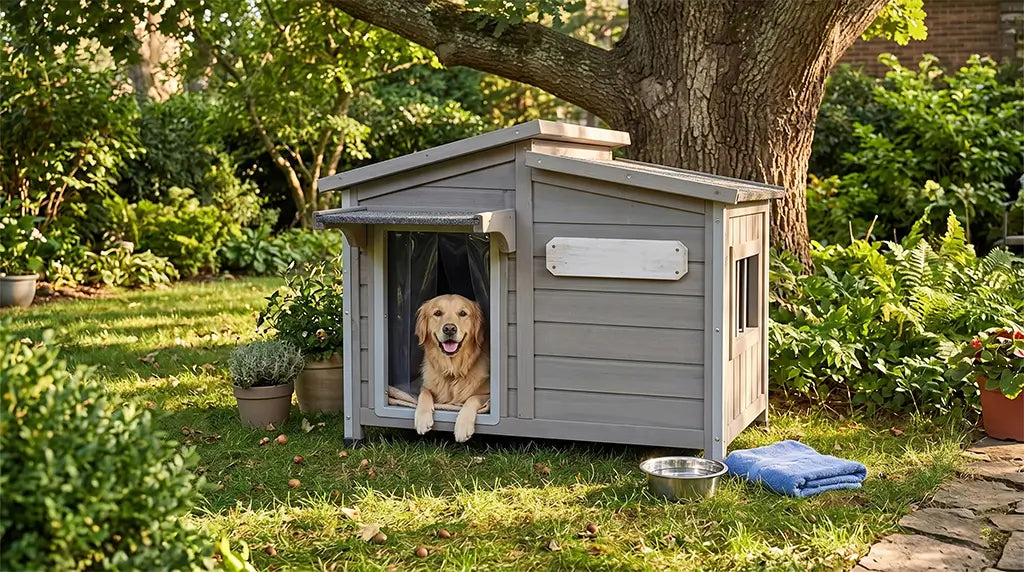
A roomy option such as this dog house for two dogs suits two dogs, or a single large dog that likes to stretch out. It runs close to five feet long and is topped with a waterproof roof, so there is room to move, turn, and rest while the interior stays dry.
Getting the Size Right
The right fit lets a dog stand, turn, and lie down in comfort. A simple way to measure:
- Length: from the nose to the base of the tail, plus 4 to 6 inches.
- Height: from the floor to the shoulder, plus a few inches.
Leave enough room to move easily, but avoid going much larger, since an oversized house holds less body heat when the weather turns cold.

Where to Place It in the Yard
Following Sun and Shade
Position matters as much as the house itself. A few pointers help:
- Pick a spot shaded during the hottest part of the day, such as the north side of the house or under a tree.
- Check the location several times, since morning shade can disappear by afternoon as the sun moves.
- Leave room for air to flow around the house, which helps the interior stay cool.
Close to the Play Area
A rest spot only works if your dog uses it. Set the house near where the action happens, so your dog can duck in for a break and rejoin play without crossing the whole yard. Keeping it within sight also makes it feel like part of the group rather than a lonely outpost.
Set It Up as a Rest Station
A dog house works harder when treated as a full rest station rather than a box in the corner.
Water and Bedding
Keep a bowl of fresh, cool water within easy reach so your dog can rehydrate without wandering off. Add a comfortable mat, pad, or blanket inside for cushioning, which is especially welcome for older dogs and their joints. Washable bedding keeps the space clean and simple to maintain.
Keeping It Cool
Airflow is the key to a cool interior. Helpful features include a ventilation window, a raised floor that lifts the house off hot ground, and a roof that opens to release warm air. An option such as this wooden dog kennel with a covered porch and window uses the window to draw a cross-breeze and the covered porch as a shaded spot to lounge just outside the den, while the wood itself stays cooler than plastic in direct sun. On especially hot afternoons, a cooling mat inside adds another layer of relief.
A quick checklist for a complete rest station:
|
Add this |
Why it helps |
|
Fresh water bowl nearby |
Prevents dehydration after active play |
|
Soft, washable bedding |
Cushions joints and keeps the space clean |
|
Ventilation window or vents |
Releases warm air and keeps the inside cooler |
|
Raised floor |
Blocks ground heat and damp, improves airflow |
|
Cooling mat for hot days |
Adds an extra cool surface to lie on |

In Summary
A backyard dog does not strictly need a dog house, but most benefit from one. It provides steady shade, all-day weather cover, and a secure den, helping your dog recover from active play and stay comfortable outdoors no matter how the day's sun and weather change.
FAQs
Where to put a dog house in the yard?
Choose a spot that stays shaded through the hottest hours and check it at a few different times, since shade moves with the sun. A position near the play area, within sight, and with open air around it keeps your dog close and the inside cool.
Can a dog house keep my dog cool?
Yes, when it is set up well. A dog house blocks direct sun and holds its shade all day, and features like a ventilation window, a raised floor, and a roof that opens let warm air escape. Place it in the shade, add fresh water and a cooling mat, and it becomes a comfortable spot to beat the heat.
Is wood better than plastic outdoors?
Wood and plastic each have strengths. The comparison below shows how they stack up for a backyard rest spot. For most backyards, solid wood gives a cooler interior and a more settled, natural look, while plastic wins on low weight and easy rinsing.
|
Factor |
Wood |
Plastic |
|
Heat handling |
Stays cooler, insulates better |
Heats up faster in the sun |
|
Durability |
Sturdy and long-lasting with care |
Light, can crack or fade over time |
|
Look in the yard |
Natural, blends into the space |
More utilitarian |
|
Weight and stability |
Heavier, stays firmly in place |
Light, may shift in strong wind |
Share:
Dog House Material: Wood vs. Plastic Compared
What Size Dog House Does a Medium Dog Need?