
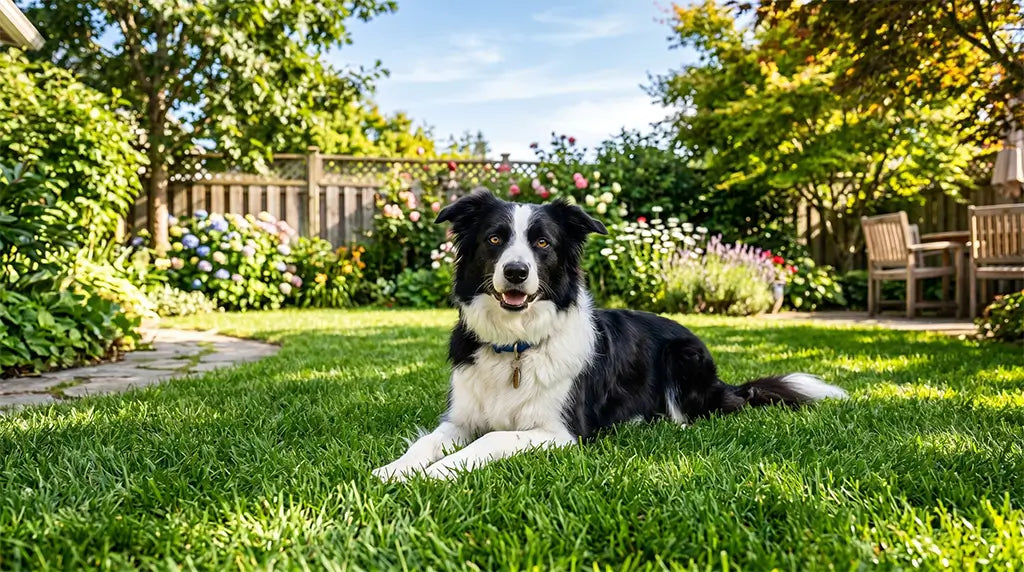
A medium dog needs a house that fits their real body size, not just their weight category. The right dog house should let your dog enter comfortably, stand naturally, turn around, and lie down in a relaxed resting position.
For most medium dogs, the best fit is not the biggest house available. It is a sheltered space with enough clearance for daily movement, without leaving so much empty room that the house feels drafty or less secure.

Is Your Dog Actually Medium?
The word “medium” can be vague. Some dogs sit between small and medium, while others are closer to large. Before choosing a dog house, confirm where your dog falls by looking at both size and body shape.
The Medium Size Range
Most medium dogs weigh about 25 to 50 pounds. However, weight alone does not show how much interior space the house needs. A 35-pound Bulldog and a 35-pound Border Collie can have very different height, length, and doorway needs.
Use this range as a starting point:
|
Dog Type |
Common Weight Range |
Main Sizing Concern |
|
Small-medium |
20 to 30 lbs |
Doorway width and floor length |
|
Standard medium |
30 to 45 lbs |
Interior height, length, and turning space |
|
Medium-large |
45 to 60 lbs |
Extra height, longer floor space, and stronger structure |
If your dog is near the upper end of medium, treat the label “medium” with caution. A medium-large dog may be more comfortable in a larger house, especially if they are tall, long-bodied, or broad-chested.
Borderline Breeds to Watch
Some breeds vary enough that the same breed can fall into different size groups. Beagles, Cocker Spaniels, French Bulldogs, Bulldogs, Corgis, Shiba Inus, Border Collies, Australian Shepherds, and smaller Boxer mixes should be measured carefully.
For example, a compact Beagle may fit a smaller medium house, while a taller Beagle may need more length or doorway clearance. A Border Collie may not weigh much more than a Bulldog, but its longer legs and taller frame can require a taller house.
Always size the house for the dog in front of you, not just the average breed description.
Why Body Type Beats Weight
Weight tells you how heavy your dog is. It does not tell you how tall they stand, how long their body is, how wide their chest is, or how much room they need to turn around.
This is why body type is often more useful than weight when choosing a dog house.
Stocky vs Leggy Builds
Stocky dogs usually have wider chests, shorter legs, and heavier bodies. Bulldogs, French Bulldogs, and Corgis often need more doorway width and more side clearance. They may not need a very tall interior, but they still need enough room to enter and turn without squeezing their shoulders.
Leggy dogs usually have longer legs, taller shoulders, and longer bodies. Border Collies and Australian Shepherds may need more headroom and floor length, even if their weight is similar to a stockier breed.
A good fit should match how your dog actually moves. If your dog hesitates at the doorway, crouches too much, or cannot settle comfortably, the house is probably not the right size.
Sizes by Body Type and Breed
Different medium dogs need different sizing priorities. A stocky dog may need more doorway width, while a leggy dog may need more height and floor length.
|
Body Type |
Example Breeds |
Main Fit Concern |
What to Prioritize |
|
Compact and stocky |
Bulldogs, French Bulldogs, Corgis |
Chest width and turning room |
Wider entry and sturdy floor space |
|
Balanced medium |
Beagles, Cocker Spaniels, Shiba Inus |
Overall comfort |
Moderate height, width, and length |
|
Tall and leggy |
Border Collies, Australian Shepherds |
Standing height and body length |
Taller interior and longer floor |
|
Medium-large |
Boxer mixes, larger Border Collies |
Extra clearance |
Larger house or size-up option |
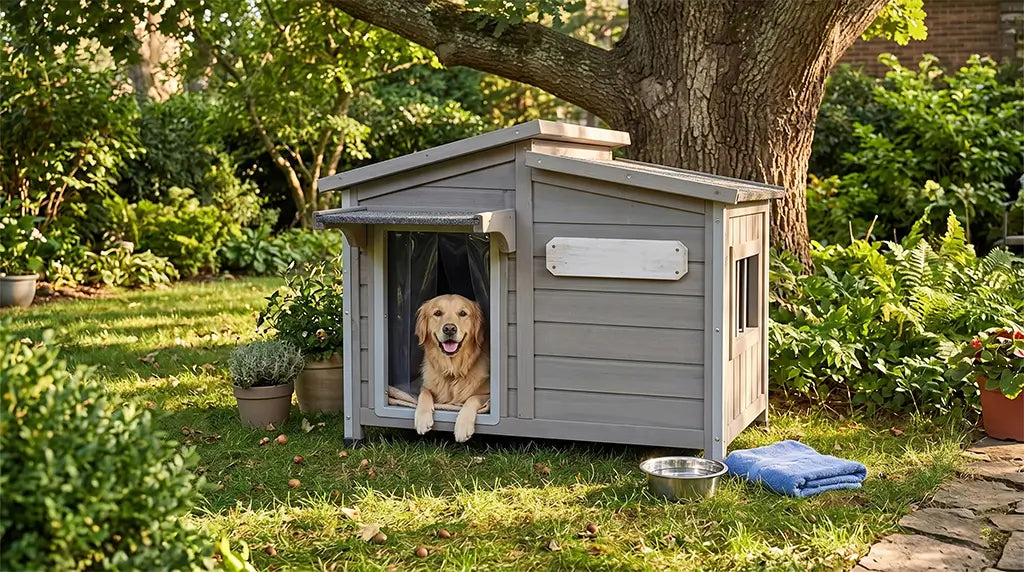
For smaller to standard medium dogs, the PET45 Dog House (20.5"-30.5"L) is a useful size comparison because it comes in S, M, and L options. The M size is listed at 26"L × 31.9"W × 32"H and is recommended for medium-sized dogs and smaller, including breeds such as Beagles, Corgis, French Bulldogs, and Border Collies.
The PET67 Dog Kennel with Porch works better as a comparison point for taller or medium-large dogs. Its listed size is 32.9"L × 23.9"W × 30.9"H, and it is recommended for medium to medium-large dogs such as Beagles, Cocker Spaniels, Bulldogs, and Border Collies. The fir wood frame, asphalt roof, PVC curtain, and metal reinforcements also make it suitable for outdoor use.

How to Measure Your Dog
The most reliable way to choose the right dog house is to measure your dog before comparing products. A soft measuring tape is enough.
Measure your dog while they are standing in a natural position. Do not measure when they are sitting, stretching, crouching, or lying down.
The Three Measurements
Focus on three measurements: body length, standing height, and shoulder or chest width.
|
Measurement |
How to Measure |
Why It Matters |
|
Body length |
Measure from the front of the chest to the base of the tail |
Helps choose interior floor length |
|
Standing height |
Measure from the floor to the top of the head or ears, whichever is naturally higher |
Helps choose interior height |
|
Shoulder or chest width |
Measure across the widest part of the shoulders or chest |
Helps judge doorway width and turning space |
If a product sizing guide gives a different measurement method, follow that guide for final comparison. Dog house brands may measure interior length, exterior length, doorway height, and roof height differently.
Adding the Right Clearance
After measuring your dog, add enough clearance for natural movement. The dog house should not match your dog’s measurements exactly.
A practical fit usually includes:
- A few inches of headroom when your dog stands naturally
- Enough floor length for your dog to lie down comfortably
- Enough width for your dog to turn around inside
- A doorway that does not force your dog to squeeze through
- Extra side clearance for broad-chested or stocky dogs
Do not add extra space without a clear reason. A dog house should still feel like a sheltered den. If the interior is much larger than your dog needs, it may feel less secure and less warm.

When to Size Up
Sizing up can help when a dog is near the top of the medium range. It can also help when the dog’s build makes a standard medium house feel tight. However, sizing up should be based on measurements, not guesswork.
Dogs at the Top of Medium
Consider sizing up if your dog is close to 50 pounds, has long legs, has a deep chest, or sleeps fully stretched out. Sizing up can also help older dogs or dogs with joint stiffness because they may need more room to enter, turn, and settle down.
Sizing up may help if your dog:
- Is tall for their breed
- Has a long body
- Has broad shoulders or a deep chest
- Is still growing
- Uses a bed, mat, or blanket inside the house
- Hesitates to enter tighter spaces
For dogs at the upper edge of medium, compare large dog houses before choosing a final size. This is especially relevant for taller Border Collies, larger Australian Shepherds, Boxer mixes, and other medium-large dogs.
Why Bigger Is Not Always Better
A bigger dog house is not automatically more comfortable. Too much space can make the house feel exposed instead of secure. In cooler weather, a very large interior may also be harder for your dog’s body warmth to help maintain.
Oversizing can create practical issues too. A larger house takes more yard or patio space, may cost more, and can be harder to move or clean.
Choose a larger size only when your dog’s measurements support it. If your dog already has enough height, length, doorway space, and turning room, a much larger model may not add real comfort.

Picking a Medium Dog House
After confirming your dog’s measurements, look at the structure and materials of the house. Size comes first, but the right design can make the house more comfortable, durable, and easier to maintain.
What to Look For
A good medium dog house should protect your dog from the ground, allow airflow, and provide enough usable space for daily rest. For outdoor placement, pay extra attention to roof design, floor height, and material durability.
Look for these features:
- Interior dimensions that match your dog’s measurements
- Doorway size that fits the chest and shoulders
- Raised floor to help reduce ground moisture
- Sloped or waterproof roof for outdoor use
- Ventilation for airflow
- Stable structure that does not wobble
- Smooth edges and pet-safe construction
- Easy access for cleaning
- Durable floor support for medium dog weight
After measuring your dog, compare dog houses for medium dogs to find an option that fits your dog’s build, resting style, and outdoor setup.
Why Wood Suits Medium Dogs
Wood is a strong option for many medium dogs because it feels stable, sheltered, and substantial. A wooden dog house can also blend well with patios, gardens, and backyards.
For medium breeds, wood can offer a good balance of durability and comfort. It is especially useful when the dog house needs to feel sturdy under daily use. Dogs that step in and out often, lean against the walls, or move around before lying down can benefit from a more solid structure.
When choosing a wooden dog house, check more than appearance. Focus on weather protection, raised flooring, ventilation, roof quality, and interior dimensions. If your dog chews or scratches, reinforced edges or chew-resistant details may also matter.

FAQs
Is my Beagle small or medium?
Most Beagles are small to medium dogs. A smaller Beagle may fit some small-medium houses, while a taller or heavier Beagle usually needs a medium dog house. Measure body length, height, and chest width before choosing.
Does a stocky dog need a bigger house?
Not always. A stocky dog may not need more height, but they often need more width and doorway clearance. Bulldogs, French Bulldogs, and Corgis should be measured across the chest and shoulders before choosing a house.
Will a medium dog house fit a growing puppy?
A medium dog house may fit a growing puppy if it matches the puppy’s expected adult size. Do not choose based only on the puppy’s current size, especially for breeds that may grow into the medium-large range.
Can a medium-sized dog live in a small dog house?
A medium-sized dog should not use a small dog house if they cannot stand, turn around, enter easily, and lie down comfortably. If any of those movements feel restricted, the house is too small.
Share:
Do Backyard Dogs Need Dog Houses to Rest In?