
Introduction
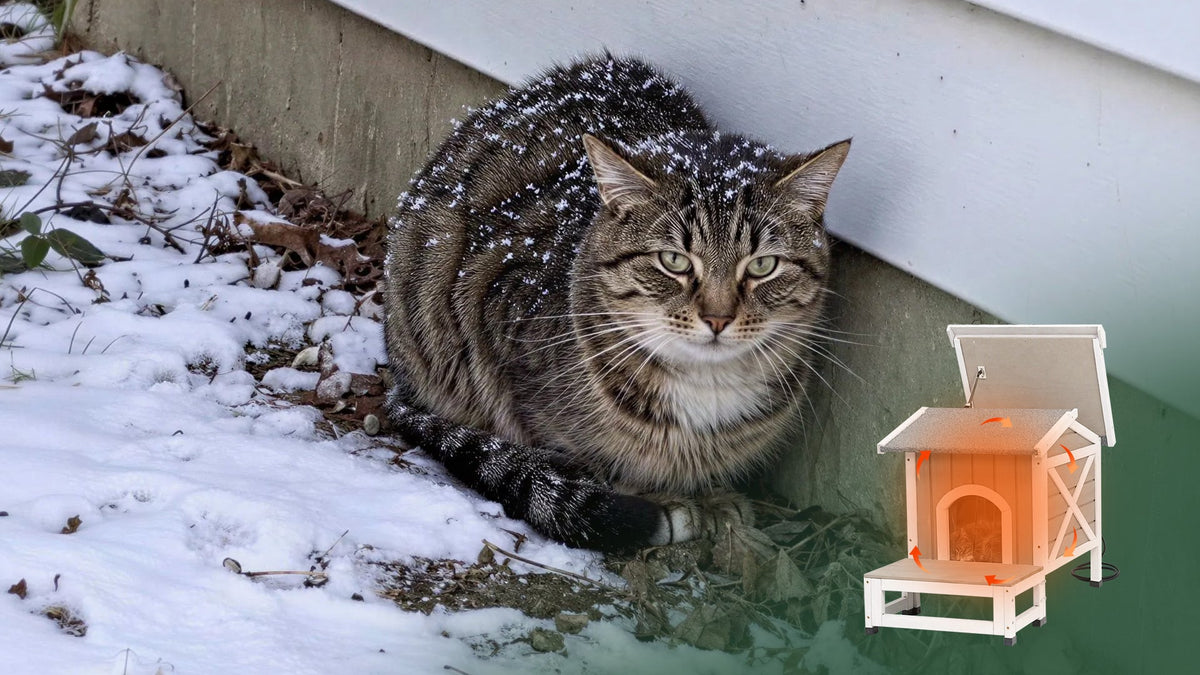
Every winter, the same question lands in our inbox in different words: there is a cat in my yard — a stray, a feral, a neighbor's outdoor cat — how do I keep her warm?
You cannot bring every outdoor cat indoors. What you can do is give her a shelter that is dry, out of the wind, and genuinely warm. That is what a heated cat house is for. This guide covers how heated cat houses work, how they differ from insulated-only houses, the features that matter most for outdoor cats, and how to set one up so cats actually use it.
What Is a Heated Cat House?
A heated cat house is a small outdoor shelter with a powered heating pad inside. The house itself — wood walls, a weatherproof roof, a raised floor — keeps out rain, wind, and ground cold. The pad adds steady warmth to the sleeping surface, so the cat is not relying on body heat alone.
Both Petscosset heated models use the same plug-in smart thermostatic heating pad: the surface warms to between 95°F and 109°F, it cuts off automatically at 127°F, and the pad itself is an 8-layer construction with a 0.78" flame-retardant sponge layer. In plain terms: warm like a sunny spot, with a built-in limit so it cannot keep climbing.
Heated vs. Insulated Cat House: Which Do Outdoor Cats Need?
- An insulated cat house traps the cat's body heat with lined walls. No electricity, nothing to plug in — a good answer for mild winters, covered porches, and places with no outdoor outlet.
- A heated cat house adds the pad. For cats sleeping outside through freezing nights — especially feral cats that cannot come indoors at all — that added warmth is often the difference between a shelter a cat uses and one she abandons for a car engine or a woodpile.
If you have an outdoor outlet and real winter, go heated. If you do not, a well-insulated house placed out of the wind is far better than nothing — our thermal-lined model below exists for exactly that situation
Features That Matter for Outdoor and Feral Cats
- Two doors. This is the one first-time buyers miss. A feral or outdoor cat will not sleep somewhere she can be cornered — a second escape door is what makes a shelter feel safe enough to use, and it is standard advice among feral-cat caretakers.
- Small interior. Cats heat a small space with their body far better than a big one. A house sized for one or two cats stays warmer than an oversized one.
- A heating pad with a thermostat and an automatic cut-off. Steady, limited warmth — not a pad that runs as hot as it can for as long as it is plugged in.
- Raised floor and a real roof. Ground cold and rain are the two enemies. The shelter should sit off the ground, under a sloped, weatherproof roof.
- A door that blocks wind without trapping the cat. Flaps or curtains help hold warmth in; the cat must still be able to push through easily, in both directions.
Our Heated and Insulated Cat Houses
PET70IN — Heated Cat House with Balcony and Escape Door
- Single-story wooden house with a balcony, built for 1–2 cats
- Plug-in thermostatic heating pad (surface 95–109°F, automatic cut-off at 127°F)
- Escape door, so outdoor cats are never cornered inside

PET73-TI (Thermal-Lined) — the no-electricity option
- 33.5"L × 27"W × 39"H, sized for 2 cats
- Double-wall construction: fir wood with a thermal liner, a three-layer fir-and-foam roof, and a PVC door curtain
- No pad and no plug — choose this where there is no outdoor power, or as the second shelter in a different corner of the yard

Where to Put a Heated Cat House (So Cats Use It)
- Out of the wind, under cover if you can. Against a wall, under an eave or porch roof, door facing away from the prevailing wind.
-
On a dry, level base. Bricks, a pallet, or paving stones under the house keep the floor off wet ground.
-
Near where the cat already sleeps. Cats adopt shelters close to their existing routes and feeding spots far faster than shelters in a "better" spot across the yard.
-
Close enough to an outlet for the pad's cord, routed where it stays dry and cannot be chewed.
- Give it time. Some cats move in the first night; wary ferals may circle it for a week. A little straw bedding inside and a familiar scent helps.
A note on bedding: inside any outdoor shelter, loose straw is the caretaker standard — it stays dry and traps heat. Blankets and towels absorb moisture, freeze, and end up colder than nothing. Replace straw when it gets damp or soiled.
FAQ
Are heated cat houses safe for outdoor cats?
Used as directed, yes — that is the job they are built for. Look for a pad with thermostatic control and an automatic temperature cut-off (the Petscosset pad warms to 95–109°F at the surface and cuts off at 127°F), keep the cord dry and out of reach, and check the shelter regularly through the winter.
Will a feral cat actually use a heated cat house?
Usually, yes — if it feels safe. Two doors, a quiet spot near the cat's existing territory, and a little patience matter more than the heat itself. A cat that feels cornered will not stay, however warm the house is.
Heated or insulated cat house — which is better?
For a cat sleeping outside through freezing weather, heated. For mild winters, a covered porch, or anywhere without outdoor power, insulated (thermal-lined) is the practical choice. Some caretakers run one of each in different spots.
How big should a heated cat house be?
Smaller than you think. One or two cats, enough room to turn around and curl up — a compact interior holds the pad's warmth and the cat's body heat far better than a spacious one. The PET70IN suits 1–2 cats; the PET04IN fits 1–2 cats under 18 lbs across two levels.
Can I leave a heated cat house plugged in all winter?
The pad is designed for the season and controls its own temperature, but follow the product manual, keep the connection dry, and inspect the cord and pad regularly. Unplug during cleaning or if anything looks damaged. And if a cat in your care is sick, injured, or struggling in severe cold, a shelter is not the finish line — contact a local rescue, TNR group, or veterinarian for help.
The Bottom Line
Warm, dry, small, and safe — with a way out. Get those four things right and an outdoor cat will do the rest. Compare both models in the heated cat house collection, or browse the full cat house range if an insulated house fits your winters better.

Share:
Heated Dog House Guide: How to Keep Your Dog Warm Outdoors This Winter