
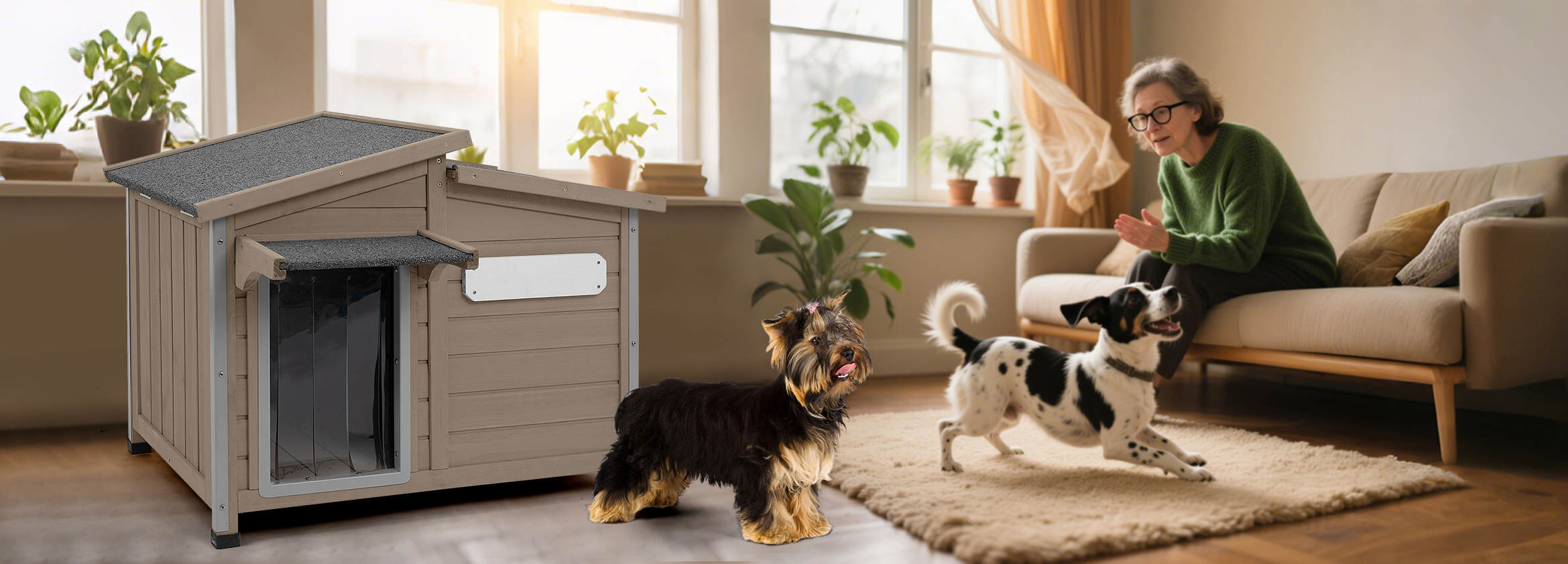
A dog's house goes by several names, with doghouse and kennel being the most common. While the two terms are often used interchangeably, they don't always mean the same thing.
What Is a Dog's House Called?
A dog's house goes by several names. Which one you use depends on the context, the type of structure, and sometimes the region. Here are the most common terms.
Doghouse
The word doghouse (or dog house) is the most casual, everyday term in American English. It refers to a small, standalone shelter built specifically for a dog, typically placed outdoors. Most people picture a classic wooden structure with a pitched roof and a single entry opening.
The term is common enough to have made its way into everyday idioms. When someone says they're "in the doghouse," it means they're out of favor or in trouble with someone.
Kennel
Kennel is the more formal and widely recognized name for a dog's house. The word comes from the Old French chenil, itself derived from the Latin canis, meaning dog. In everyday usage, a kennel can refer to:
- A small outdoor shelter for a single dog
- A professional boarding facility where multiple dogs are housed
- An enclosed run or yard area for dogs
When referring to a personal dog house, "kennel" and "doghouse" are largely interchangeable. That said, "kennel" carries a more professional tone and is the term most often used in product names and veterinary contexts. For a look at what modern options look like, visit the wooden dog houses collection.

Other Names You Might Hear
Beyond doghouse and kennel, a few other terms come up in practice: dog den, dog shelter, and dog run. Each refers to a slightly different type of structure, which the next section covers in detail.
Types of Dog Houses by Use
Not all dog houses serve the same purpose. The right type depends on where your dog spends most of their time and what kind of environment you need to provide.
Outdoor Dog Kennel
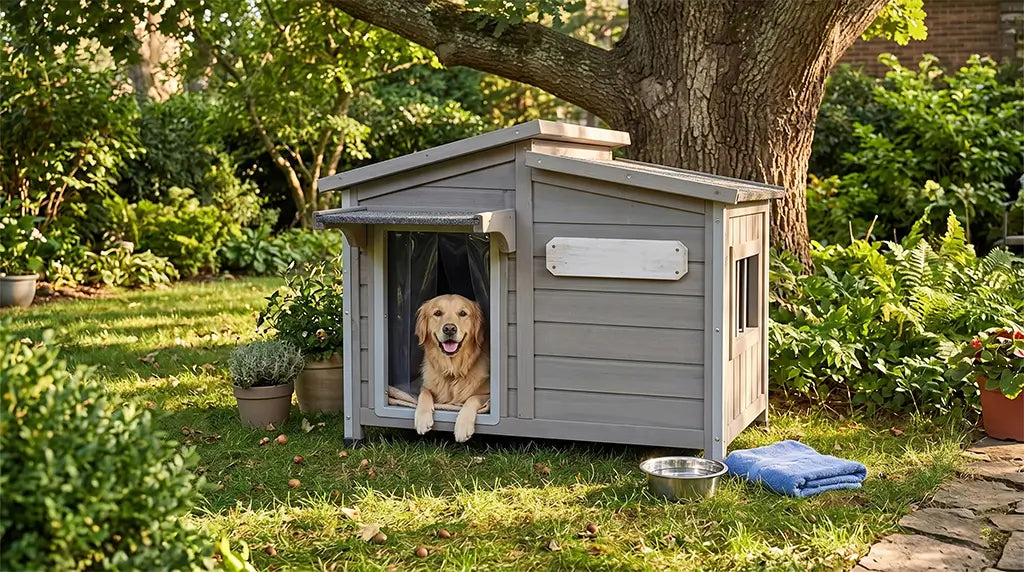
An outdoor dog kennel is a freestanding shelter built to withstand the elements. These are typically constructed from wood or heavy-duty plastic, with a weatherproof roof and a raised floor to keep moisture out. They're designed for dogs that spend extended time outside.
Indoor Dog Crate
An indoor dog crate functions differently from an outdoor kennel. Usually built from wire, plastic, or furniture-style wood panels, a crate is designed for use inside the home. It gives dogs a safe, contained space and is commonly used for training or travel.
Dog Run
A dog run is an enclosed outdoor area, typically long and narrow, that allows a dog to move around safely without access to a full yard. It may include a kennel or covered shelter at one end.
Dog Den or Dog Shelter
A dog den is a compact, cave-like enclosure that appeals to a dog's natural instinct to seek out small, enclosed spaces. A dog shelter is a broader term covering any structure that provides protection from weather, whether permanent or temporary.

Kennel vs. Doghouse
Both terms describe a dog's shelter, but "kennel" is the more formal choice used by vets, breeders, and boarding facilities, while "doghouse" is conversational and always refers to a personal backyard structure. Here is a quick guide to when each fits best.
When to Use Each Term
|
Situation |
Better Term |
|
Talking to a vet or pet professional |
Kennel |
|
Describing a backyard shelter to a friend |
Doghouse |
|
Shopping for a product online |
Either; both are widely used |
|
Referring to a commercial boarding facility |
Kennel |
|
Casual everyday conversation |
Doghouse |
Why Dogs Need a Dog House
Dogs are resilient, but they are not immune to weather, stress, or the absence of personal space. A dog house addresses all three.
Dogs are natural den animals. Their ancestors instinctively sought enclosed spaces for safety, rest, and warmth, and that instinct remains. A dog house taps into it, giving your dog a space that feels entirely their own. That sense of security can ease anxiety, especially in dogs that spend time alone during the day.
A dog house also provides critical physical protection:
- Summer: shade and a cooler resting spot away from direct sunlight, reducing the risk of heatstroke
- Winter: insulation that retains body heat and blocks wind, rain, and freezing temperatures, guarding against hypothermia
Beyond weather, a defined space helps dogs feel settled. Those with their own retreat tend to show fewer stress-related behaviors, such as excessive barking or destructive chewing.
When a Dog Needs a Dog House
A dog house becomes especially important when:
- Your dog spends any part of the day outdoors, even if they sleep inside at night
- You live in a region with extreme temperatures, heavy rain, or strong winds
- Your dog shows signs of anxiety or stress and needs a quiet retreat
- You have a multi-dog household where each dog benefits from their own space
- Your dog is a breed with a thick coat that prefers shaded, cooler resting spots

What Makes a Good Dog House
Size: Does It Fit Your Dog?
Size is the single most important factor. A dog house that is too small is uncomfortable; one that is too large will not retain enough body heat in cold weather. As a general rule, your dog should be able to stand up, turn around, and lie down comfortably inside without the space feeling cavernous.
Most manufacturers size their dog houses by dog weight. You can shop by size directly: the small dog house range covers dogs up to 25 lbs, and Petscosset's collection extends to medium, large, and extra-large options to suit dogs of all sizes.
Material: Wood vs. Plastic
Wood and plastic are the two most common materials, and each has distinct trade-offs. Wood is generally the better choice for outdoor use because it insulates more naturally and tends to suit backyard settings better visually.
|
Feature |
Wood |
Plastic |
|
Insulation |
Better natural insulation |
Minimal without added lining |
|
Durability |
High, especially with weather treatment |
High; resistant to rot and moisture |
|
Appearance |
Natural look; blends well outdoors |
Functional but less visually appealing |
|
Maintenance |
Requires occasional sealing or painting |
Easy to clean; low maintenance |
|
Chew resistance |
Lower unless reinforced with metal framing |
Higher |
Weather Protection and Insulation
A well-built dog house should include:
- A sloped or pitched roof to shed rain and snow
- A raised floor to prevent ground moisture from seeping in
- An offset or partially covered entry to block direct wind
In colder climates, insulated walls make a significant difference in keeping the interior warm without requiring a heat source.

In Summary
A dog's house is most commonly called a doghouse or a kennel. Kennel is the more formal term. The right shelter depends on your dog's size, your climate, and how much time they spend outdoors.
FAQs
What is a dog's house called?
A dog's house is most commonly called a doghouse or a kennel. Other terms include dog den, dog shelter, and dog run, each referring to a slightly different type of structure.
Is a kennel the same as a doghouse?
In a backyard context, yes. The key distinction is that "kennel" also covers commercial boarding and breeding facilities, while "doghouse" is used only for a personal pet shelter.
What is a place where dogs are kept called?
It depends on the setting. A private backyard shelter is called a doghouse or kennel. A facility that boards or breeds multiple dogs is called a kennel. A municipal facility that houses stray or surrendered dogs is called a dog pound or animal shelter.
What is a dog's house called in Spanish?
In Spanish, a dog's house is called a caseta para perros or perrera. The word perrera is the closest equivalent to "kennel" and covers both the backyard shelter and the commercial facility sense. Caseta para perros, meaning "dog hut" or "dog booth," is the more common everyday term.
Share:
What type of the nest box will you choose?
What Is a Garden Bed? A Heartfelt Guide to Growing Your Own Little Paradise