
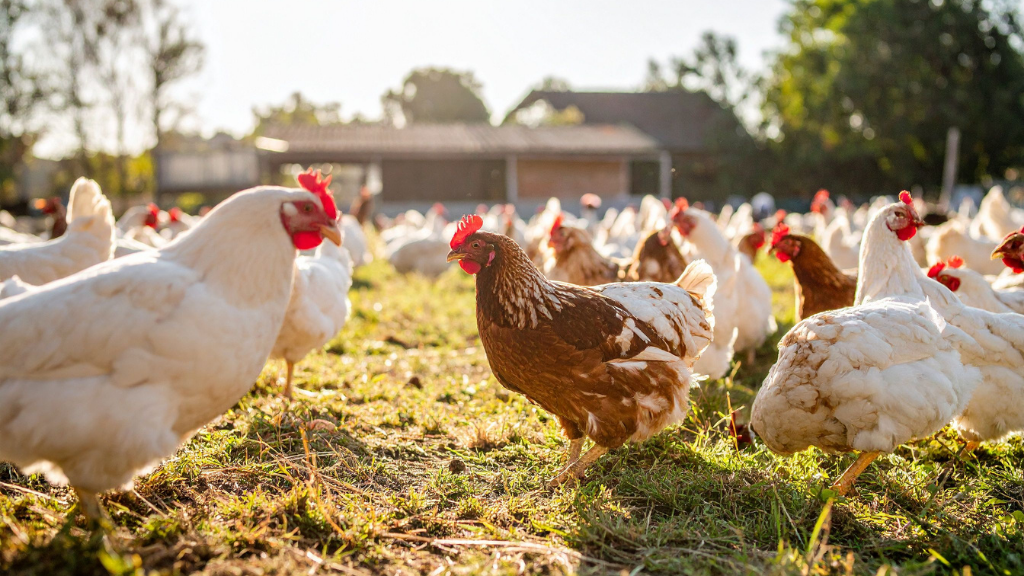
A chicken tractor with wheels gives your flock fresh ground, natural forage, and a cleaner living space without the effort of dragging a heavy coop across your yard. This guide covers how it works and exactly how often you should move it.
What Is a Chicken Tractor with Wheels?
What "Tractor" Actually Means
The name has nothing to do with farm machinery. It comes from what the chickens do to the ground beneath them. As they scratch, peck, and forage, they till the soil, break up compacted earth, spread manure evenly, and clear out insects and weeds. They do the work of a tractor.
A chicken tractor is a portable, floorless coop that lets your birds do that work in a controlled, protected space. You move it regularly so the chickens always have access to fresh ground, and the patch they just left gets time to recover.

Floorless Design and Ground Access
The floorless design is what separates a chicken tractor from a conventional coop. There is no base, no flooring, and no barrier between the chickens and the earth. When you place it on the grass, the birds immediately have direct access to the soil beneath them.
Chickens confined to a floored coop cannot express their natural foraging behavior. They pace, they peck each other, and the ground beneath them turns into a concentrated mess of waste. A floorless design lets them do what they are built to do, and because you move the tractor regularly, no single patch of ground bears the full burden.
Why Wheels Make the Difference
Wheels make a chicken tractor easier to use consistently. Without wheels, even a small wooden tractor can be difficult to drag, especially across damp grass, uneven soil, or sloped ground.
A wheeled design helps reduce strain on the frame and makes routine movement more practical. For smaller backyard setups, a chicken tractor with wheels can be easier to reposition than a fixed coop that must be lifted or pulled by force.
Wheels are especially useful when:
- The tractor is moved daily or every few days.
- The structure includes a nesting box, roosting area, or attached run.
- One person needs to move the coop without help.
- The yard has mixed surfaces such as grass, soil, mulch, or compacted paths.
- The flock needs frequent rotation to prevent overgrazing.
The more often the tractor needs to move, the more important the wheel system becomes.

Why Move Regularly?
Healthier Foraging and Natural Nutrition
Chickens are omnivores. When they have access to fresh ground, they eat grass, seeds, beetles, grubs, worms, and whatever else they can scratch up. This natural diet supplements their feed and contributes to better egg yolk color, stronger shells, and overall flock health.
The key word is "fresh." Once a patch has been picked clean, there is nothing left to forage. Moving the tractor keeps the chickens on productive ground where they can actually find food rather than pace on bare dirt.
Manure Distribution and Soil Benefit
Chicken manure contains nutrients that can support soil health when spread in moderation. A moving chicken tractor acts like a controlled rotation system because manure is deposited across different areas over time.
The problem is concentration. Too much manure in one spot can:
- Burn grass
- Create strong odors
- Attract flies
- Increase mud and surface contamination
- Make the area unpleasant for chickens
Moving the tractor before manure builds up helps distribute nutrients more evenly. It also reduces the need to clean a heavily soiled fixed run.
Disease and Parasite Prevention
Parasites like coccidia and intestinal worm larvae thrive in soil that has been heavily contaminated by the same flock over time. When chickens scratch and peck in the same ground repeatedly, they re-ingest the parasites their waste has deposited.
Moving the tractor breaks this cycle. Fresh ground means a dramatically lower parasite load, which reduces the need for chemical treatments and keeps your flock healthier with less intervention. The USDA's guidance on poultry health management supports rotational grazing as a practical disease prevention strategy for small flocks.

How Often Should You Move It?
There is no single right answer. The correct move frequency depends on three factors working together: flock size, tractor footprint, and ground condition.
Flock Size and Ground Coverage
More chickens means more scratching, more foraging, and more manure deposited in the same footprint. A small flock can comfortably occupy a patch for several days. A larger flock can strip it bare in 24 hours.
Use these ranges as a starting point:
|
Flock Size |
Suggested Move Frequency |
Ground Management Notes |
|
Every 5 to 7 days |
Works best on dry ground with good grass coverage |
|
|
Every 2 to 4 days |
Watch for manure buildup, odor, and bare patches |
|
|
Every 1 to 2 days |
Needs more space and a consistent rotation plan |

Tractor Footprint and Grazing Area
A larger tractor gives your chickens more ground to work through before a move is needed. A 10x12 foot tractor provides a flock of six considerably more grazing room than a 4x8 foot one, which means you can go longer between moves without degrading the ground.
If you find yourself moving the tractor every single day with a small flock, the tractor is likely undersized for the number of birds. Matching tractor size to flock size matters just as much as move frequency.
Season and Ground Condition
Ground degrades faster in summer. Warm, moist soil combined with a heavy manure load creates conditions where bacteria and parasites multiply quickly, and grass dies faster under heat and pressure. In summer, you will generally need to move more frequently than the table above suggests.
In cooler months, grass grows more slowly and soil holds up better, so you can often extend your intervals slightly. Wet ground is the exception. If the soil beneath the tractor is waterlogged, move immediately regardless of your schedule. Wet, manure-saturated soil concentrates disease risk fast.
The Visual Cue Method
The simplest way to decide when to move a chicken tractor is to inspect the ground. Move the tractor when you notice:
- Grass is flattened, thinned, or mostly eaten.
- Soil is starting to show through.
- Manure is visible across the run area.
- The area smells unpleasant.
- The ground feels wet, sticky, or compacted.
- Chickens spend more time pacing than foraging.
- Feeders or waterers are becoming dirty quickly.
The best time to move the tractor is before the patch is destroyed. The goal is to let chickens use the ground, not exhaust it. If the area still has some green cover and manure is lightly scattered, the rotation schedule is usually working.
How to Move Your Chicken Tractor
Raise, Latch, Pull, Lower
The moving process is straightforward with a proper wheel system in place. Follow these steps:
- Engage the wheel lift. Depending on the design, this is a lever you push down or a handle you rotate. The rear of the tractor tips up slightly onto the wheels.
- Latch all doors and access panels so nothing swings open mid-move.
- Grip the front handle or rope and pull forward in a straight line. The tractor rolls on its wheels while the front skids slide along the ground.
- Release the wheel lift at the new position and let the tractor settle flat onto the ground, making sure all edges sit flush against the soil.
With a well-designed mobile chicken tractor with wheels, one person can complete this process in under two minutes.

How Far to Move Each Time
The standard practice is to move the tractor forward by one full tractor length each time. This ensures the new patch is completely fresh with no contact from the previous position's manure load.
If you are moving daily, half a tractor length can work in some situations, but a full length is the safer default. Over a season, you will trace a long path across your yard or pasture. That is exactly the point: the land behind recovers while the land ahead waits.
Tips for Slopes and Uneven Ground
Slopes require extra care. Move downhill when possible, since pushing a loaded coop uphill is physically demanding and creates a tipping risk. If you must move uphill, do it in short increments and keep a firm grip on the handle throughout.
On uneven ground, walk the perimeter after each move and press down any section of the frame that has lifted off the soil. Even a two-inch gap at the base is enough for a predator to get in or a chicken to get out. Make this check a habit every time you move.
In Summary
A chicken tractor with wheels gives your flock the freedom to forage naturally while keeping them protected from predators and the elements. Move it based on flock size, tractor footprint, and ground condition, and both your chickens and your land will be better for it.


Share:
How Deep Should a Raised Garden Bed Be?
What Is a Catio? A Beginner's Guide for Cat Owners