
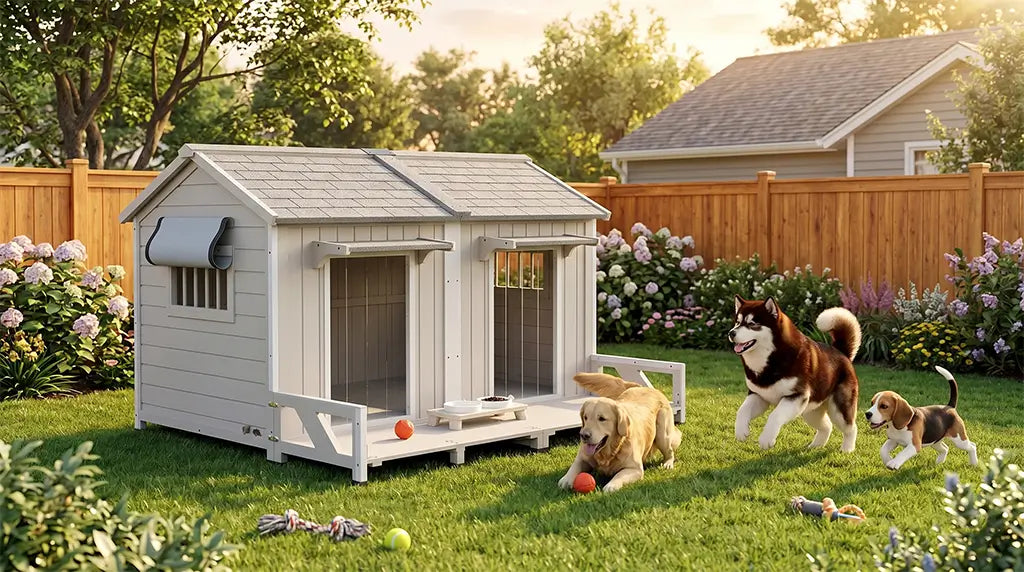
Throwing an old blanket into a dog house might seem like enough, but it can actually do more harm than good. Standard cotton bedding traps moisture from the air, leaving your pup freezing when temperatures drop. Creating a safe outdoor shelter requires a strategic approach. You need a space that stays warm in freezing winters, cool in scorching summers, and completely dry after a storm.
This guide covers how to insulate floors, manage airflow, and choose durable materials that won't flatten under your dog’s weight, ensuring your pets stay safe and comfortable year-round.
The Essentials: What Belongs Inside?
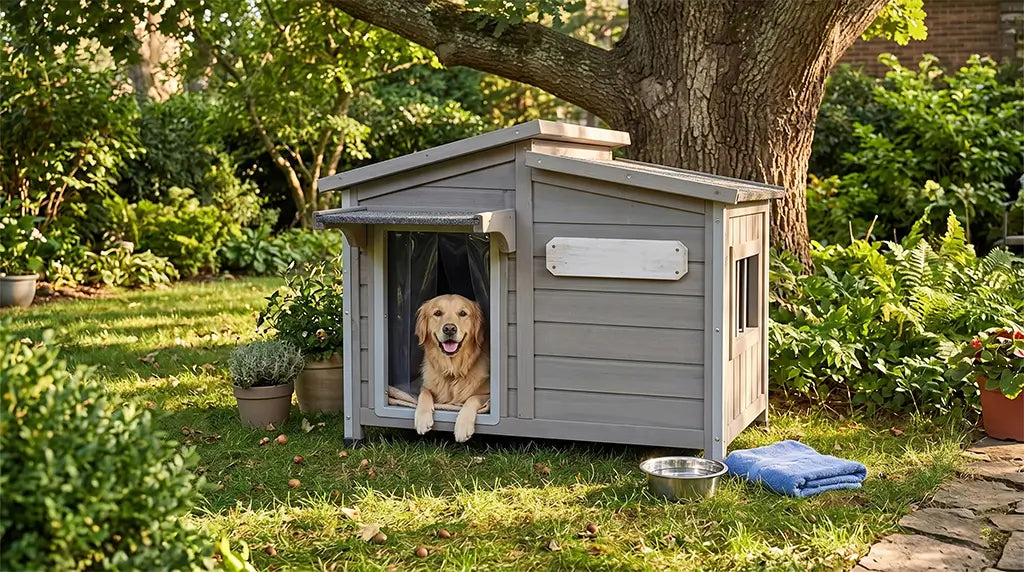
Think of a premium outdoor dog house as a cozy bedroom, not a backyard storage shed. If you want a shelter that naturally blocks out drafts and dampness before you even add bedding, starting with a heavy-duty, weather-resistant structure is step number one. Once you have that solid foundation, you only need four core components to keep it perfectly functional:
- A dedicated sleeping surface: Raised off the ground or heavily padded.
- Fresh water: Placed near the entrance, but not right in the sleeping zone.
- Weather blocks: A heavy-duty door flap to stop drafts.
- One or two indestructible toys: Just enough to keep them busy without cluttering the space.
Before you put anything inside, run it through this quick checklist: Will it hold onto moisture? Is it easy to spray down or wash? Will it survive if my dog decides to use it as a chew toy?
💡 Layout Strategy: If the shelter is inside a larger outdoor pen, keep the sleeping area as far away from their designated bathroom spot as possible. Dogs are naturally clean animals and won't rest comfortably if their bed smells like urine or muddy ground.

Choosing the Best Bedding (Season by Season)
Not all bedding is created equal. While a plush pillow works great on your living room rug, it can quickly become a soggy, moldy mess outdoors.
1. Raised Dog Beds (Best All-Rounder)
Lifting your dog off the floor is the easiest way to protect them from cold ground temperatures, damp soil, and crawling insects.
- What to look for: A sturdy metal or heavy-duty PVC frame with a breathable mesh fabric.
- Pro-Tip: Make sure to leave a couple of inches of clearance between the bed and the walls. If the fit is too tight, it blocks natural airflow and makes cleaning a nightmare.
2. Washable Outdoor Mats
If your dog house stays completely shielded from driving rain, a durable, water-resistant mat is an excellent option for mild weather.
- What to look for: Mats with removable, machine-washable covers.
- Pro-Tip: Keep two identical mats on hand. That way, you can easily swap a fresh one in while the dirty one is in the laundry. If the mat ever smells musty, it’s trapping moisture—wash it immediately.
3. Straw (The Winter Champion)
There is a reason farmers have used straw for generations. It creates natural air pockets that trap your dog's body heat, making it incredibly effective at keeping them warm.
- Crucial Difference: Use straw, never hay. Hay holds onto moisture, packs down flat, and rots incredibly fast. Straw repels moisture much better, though it still needs to be completely cleaned out and replaced every couple of weeks.

4. The Problem with Blankets and Towels
Cotton blankets and towels act like giant sponges. They absorb humidity from the air and moisture from your dog’s paws, staying damp for hours. A wet blanket will actually pull heat away from your dog, making them much colder than a bare floor would. If you do use them, check them daily and bring them inside every evening.
Weatherproofing for the Seasons
|
Season |
Primary Strategy |
Key Action Item |
|
Winter |
Block Wind + Defend Against Ground Chill |
Install floor insulation & heavy door flaps |
|
Summer |
Maximize Airflow + Create Deep Shade |
Use elevated mesh cots & clear roof vents |
Defeating the Winter Cold
When the freezing months arrive, turning an outdoor shelter into a warm sanctuary requires a strategic setup. Insulating a large dog house comes with its own unique challenges, as a bigger interior volume requires much more effort to trap and retain your dog's natural body heat. To maximize warmth during freezing months, follow these steps:
- Insulate the Floor First: Cold air attacks from the ground up. Lay down a thick moisture barrier—like a pet-safe foam insulation board or a waterproof garage mat—underneath your dog's actual bedding.
- Install a Windproof Door Flap: A thick, flexible vinyl door flap acts like a front door, trapping body heat inside and keeping freezing wind out. Ensure it's lightweight enough for your dog to comfortably push through.
- Use Outdoor-Rated Heating Pads: If you use a heating pad, it must be specifically rated for outdoor pet use with a steel-wrapped, chew-resistant cord. Only place it on one side of the house so your dog can move to a cooler spot if they get overheated. Never use human electric blankets.

Beating the Summer Heat
While a basic wooden dog house provides excellent shade, it can still trap warm air during the peak of July and August. To keep your dog cool and comfortable during the warmer months, implement these essential strategies:
- Elevated Mesh Beds: Swap out thick cushions for a taut mesh cot that allows air to circulate directly under your dog’s belly.
- Smart Water Placement: Keep a heavy, tip-proof water bowl right at the entrance or just outside in the shade. Refresh it twice a day—dogs won't drink hot, stagnant water, which puts them at risk for dehydration.
- Ventilation Vents: Check that the house has small air vents or windows near the roof line. This allows hot air to escape rather than turning the shelter into a sauna.

The "Keep Out" List: What to Avoid
To prevent vet visits and pest infestations, keep these items completely out of the shelter:
- Food Bowls with Leftovers: Leaving kibble out overnight is an open invitation for ants, rats, raccoons, or worse.
- Plush/Squeaker Toys: Soft toys trap moisture and tear apart easily. If a dog swallows a squeaker or loose stuffing while unsupervised, it can cause a fatal intestinal blockage.
- Scented Cleaners & Air Fresheners: A dog’s sense of smell is incredibly sensitive. Strong chemical odors or essential oils trapped in a small space can cause severe skin and respiratory irritation.
Weekly Maintenance Checklist
A quick five-minute inspection once a week keeps the space healthy. Don't wait for a bad smell to investigate.
- Pull the bedding out and give it a hard shake to remove dirt and loose fur.
- Feel the corners and under the mattress for dampness, leaks, or hidden mold.
- Wipe down the walls with a pet-safe, unscented sanitizing wipe.
- Inspect toys for deep cracks or missing chunks, throwing away anything broken.
- Clear any debris or mud blocking the roof vents, windows, or door flap.
Knowing When to Bring Your Dog Inside
An outdoor shelter is a rest stop, not an impenetrable fortress. Even the most winter-hardy or heat-tolerant breeds have limits.
Bring your dog into your main home immediately if:
- Weather conditions turn extreme (freezing blizzards, torrential storms, or high heat waves).
- Your dog is a puppy, a senior, or dealing with a health condition.
- You notice warning signs like shivering, relentless panting, extreme lethargy, whining at your back door, or unusually pale or bright red gums.

FAQs
What is genuinely the warmest bedding for dogs staying outside?
Hands down, dry agricultural straw or a highly insulated, raised pet bed. The biggest mistake well-meaning owners make is piling up heavy cotton blankets. Blankets absorb atmospheric humidity and your dog’s breath, quickly turning into a freezing, soggy sheet. Straw, on the other hand, has hollow shafts that naturally trap your dog's body heat. Just remember: buy straw, not hay, and throw it out the moment it feels damp.
What is the best ground material for an outdoor potty area?
Stick to pea gravel, well-draining artificial turf, or natural grass. Pea gravel is an excellent choice because it drains liquids instantly and won't track mud into the kennel; just ensure the stones are smooth so they don't irritate your pup's paws. The golden rule here? Keep this designated bathroom zone at least several feet away from the shelter's entrance. Dogs are clean cave-dwellers by nature and hate sleeping near their waste.
What bedding holds up best in large outdoor kennels?
For bigger breeds, structural durability is your main priority. Standard plush dog beds will flatten like a pancake under a heavy dog, losing all their insulating power within days. Instead, pair a heavy-duty, aluminum-framed raised mesh bed with a spacious, well-built large dog house that won't sag or trap heat. In the dead of winter, you can add an insulated foam topper to this frame; in the summer, leave the mesh bare so cool air can circulate directly under their heavy coats.

Share:
Dog Kennels vs. Dog Crates: Which One Does Your Dog Really Need?
Why Won't Your Dog Use the Dog House? 4 Critical Fixes